Japanese culture is a rich tapestry woven with traditions, rituals, art, and philosophy that
have
evolved over centuries. From the serene landscapes of cherry blossoms and bamboo forests
to the bustling streets of Tokyo, Japan's culture is a fascinating blend of ancient customs and
modern innovations.
One of the most prominent aspects of Japanese culture is its emphasis on respect, harmony,
and politeness. This can be seen in the intricate rituals of bowing, which vary depending on
the social status and context of the interaction. Respect for elders, authority figures, and
nature is deeply ingrained in Japanese society, contributing to a sense of order and
tranquillity.
Traditional Japanese arts, such as tea ceremony
(sado), flower arranging (ikebana), and calligraphy
(shodo), reflect this reverence for simplicity,
beauty, and mindfulness. These practices often
embody the concept of "wabi-sabi," finding beauty
in imperfection and impermanence.
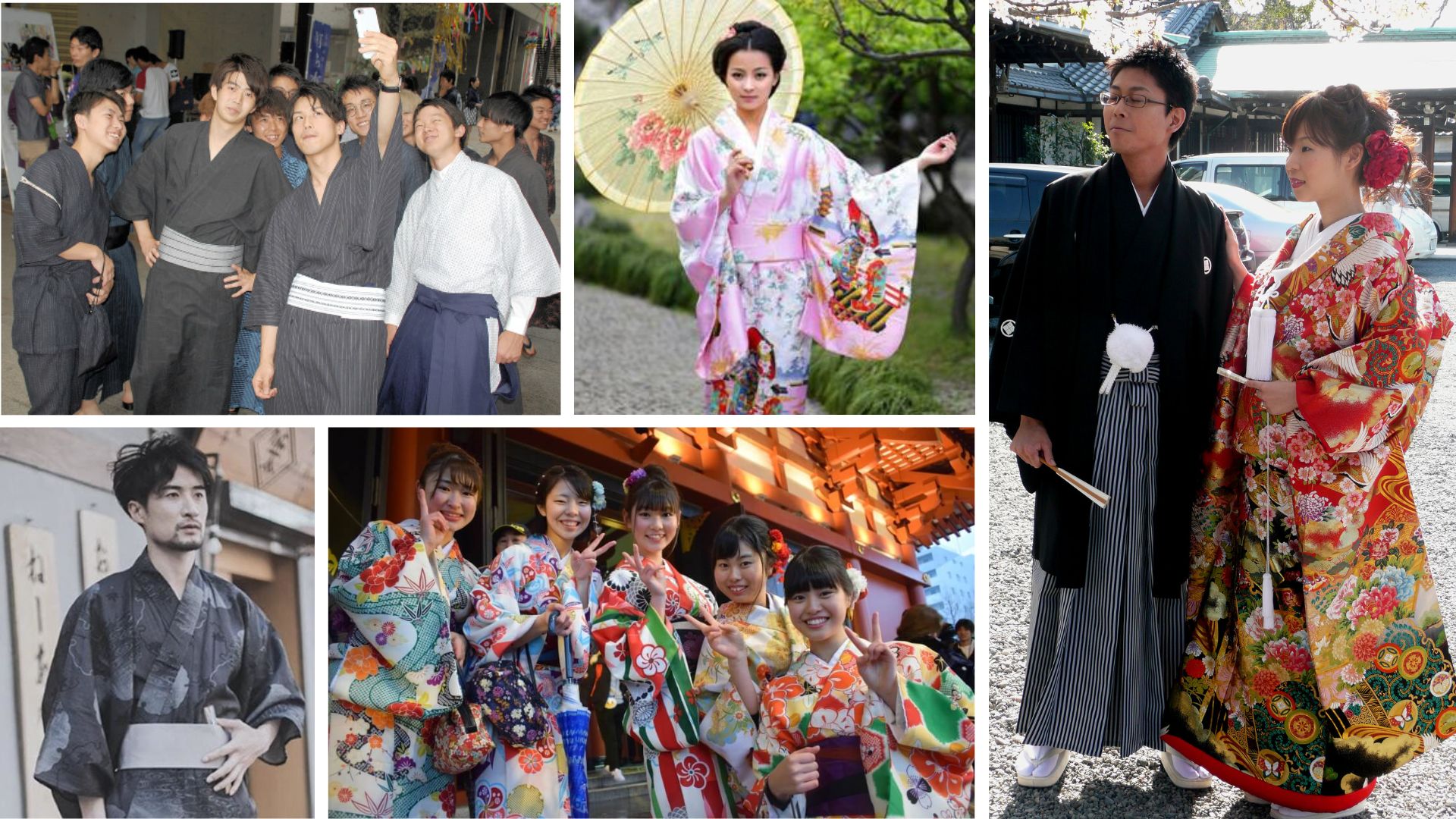
Japan Clothing
Traditional Japanese clothing, steeped in history and cultural
significance, reflects the
country's rich heritage and unique aesthetic sensibilities. The most iconic garment, the
kimono, embodies centuries of tradition and craftsmanship. Its name, "kimono," translates to
"something to wear" or "thing worn on the shoulders," highlighting its central role in Japanese
attire.
The roots of Japanese fashion trace back to ancient times, drawing influences from various
sources such as the Heian period's colour palettes, Tang dynasty silhouettes, and motifs
inspired by nature and traditional literature. Fabrics like silk, meticulously crafted, have
been
integral to traditional clothing, with styles evolving over time, particularly by the end of the
Edo period.
Beyond the kimono, traditional Japanese clothing encompasses
attire worn by different indigenous groups, such as the Ainu and
Ryukyuan people. The distinct fabrics like bingata and bashōfu,
produced on the Ryukyu Islands, contribute to the rich tapestry
of Japanese fashion.
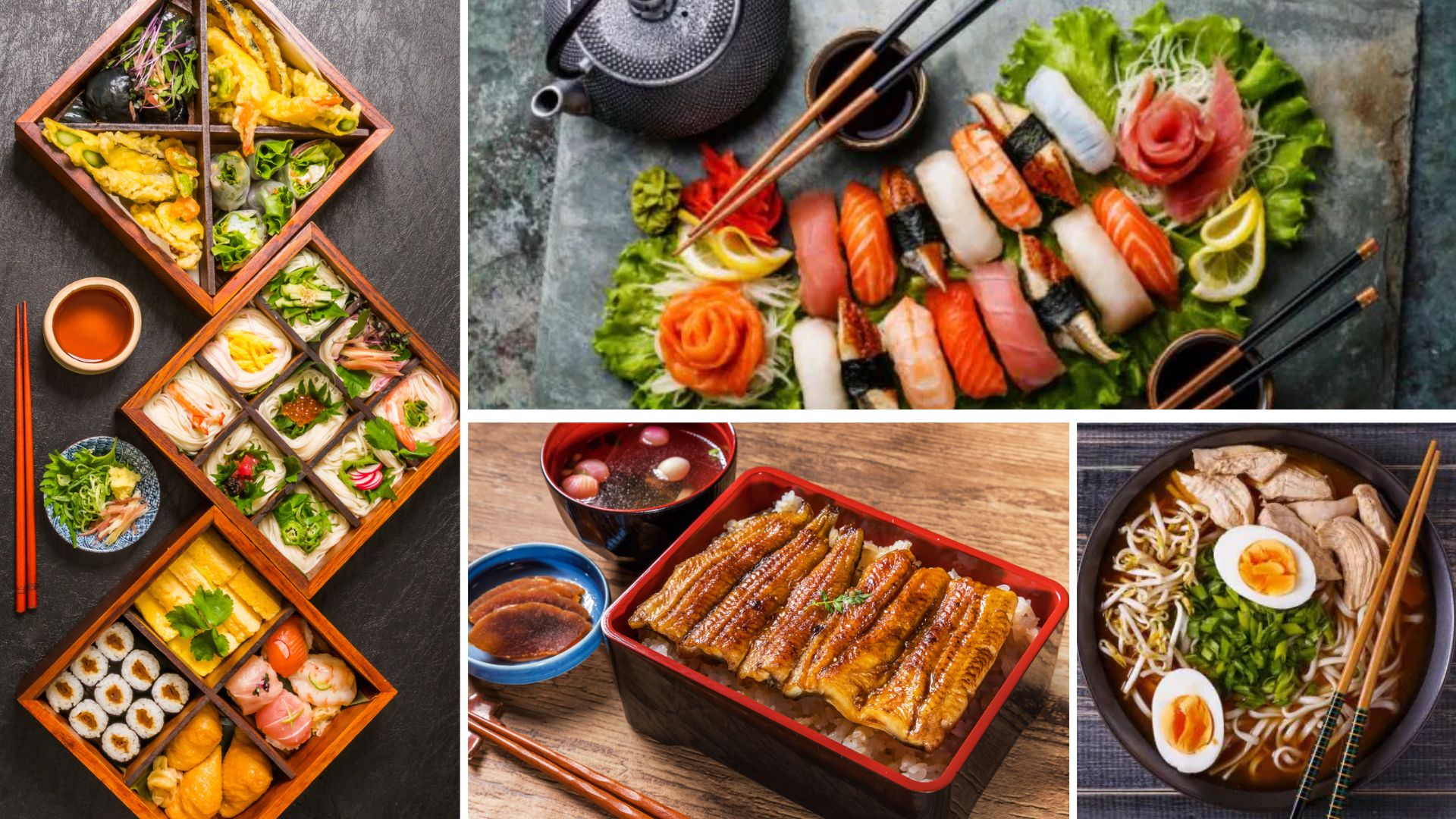
Japan Food
Sushi
:Put simply, sushi is raw fish served on rice
seasoned lightly with vinegar. It’s in the variety of
flavours and textures – like tangy,
creamy uni (sea urchin roe) and plump,
juicy amaebi (sweet shrimp) – those things get
interesting.
Ramen
:Ramen (egg noodles in a salty broth) is Japan’s
favourite late-night meal. It’s also the perfect
example of an imported dish – in this case from
China – that the Japanese have made completely
and deliciously their own.
Unagi
:
Unagi is river eel, usually grilled over charcoal and
lacquered with a sweet barbecue sauce. According
to folklore, unagi is the ideal antidote to the heat
and humidity of Japan’s stultifying summers.
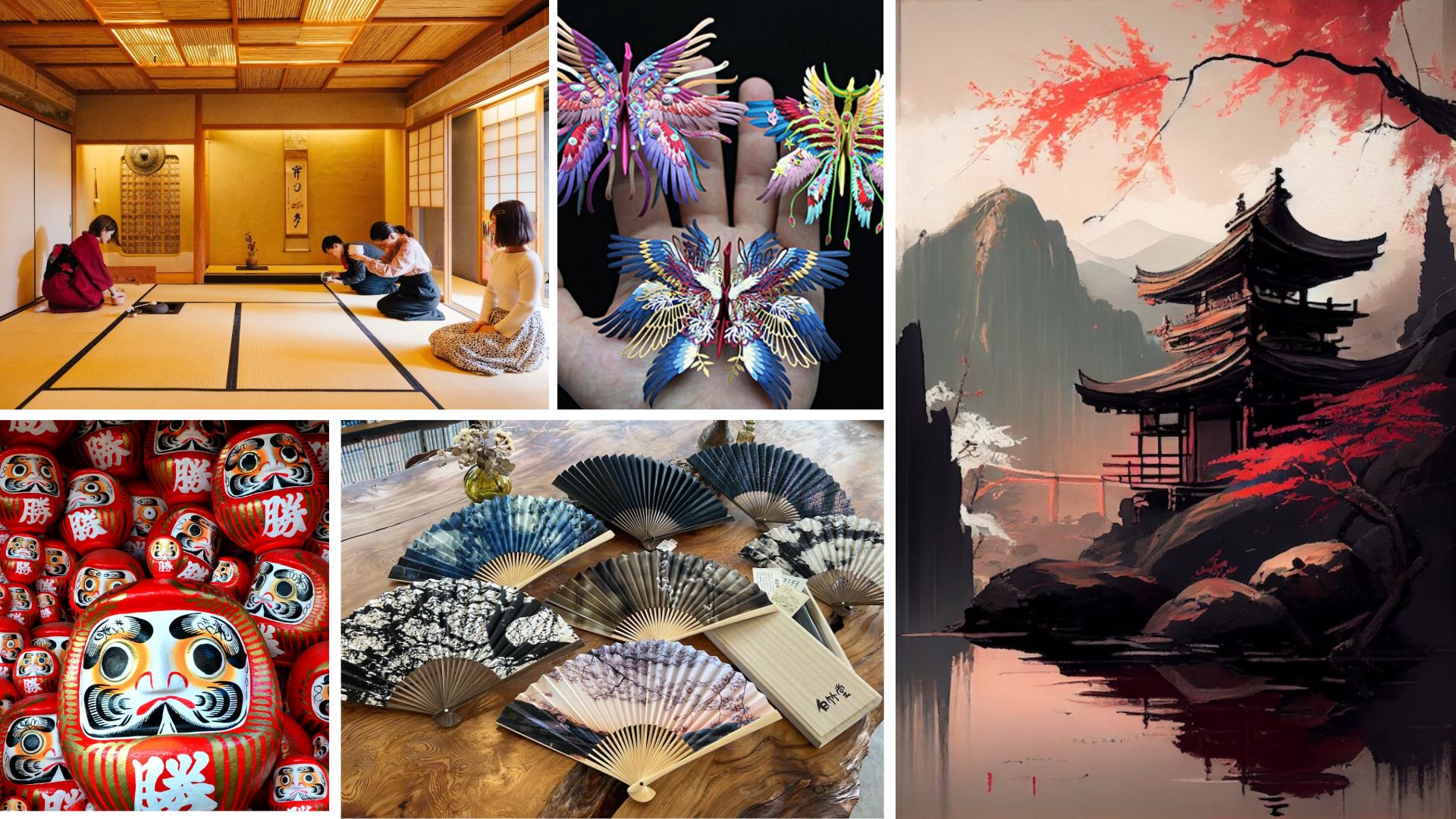
Japan Art
The arts of Japan showcase a unique blend of
delicacy, simplicity, and exquisiteness, reflecting
the country's rich cultural heritage and aesthetic
sensibilities. Traditional Japanese art forms are
deeply rooted in history, embodying a reverence
for nature, harmony, and the subtleties of human
emotion.
Traditional Japanese arts encompass a wide range
of disciplines, including the tea ceremony,
calligraphy, ikebana (flower arranging), gardening, architecture, painting, and sculpture.
These forms emphasize meticulous craftsmanship and a deep understanding of balance and
proportion. For instance, the tea ceremony is not merely about drinking tea but also about
creating a serene and harmonious environment through every aspect of the ritual, from the
utensils to the arrangement of the space.

Japan Film Industry
Japanese cinema, known as "Eiga," boasts a rich history
spanning over a century, marked by innovation, diversity, and
global influence. It has given rise to signature genres and
subgenres, shaping cinematic storytelling not only in Japan but
also worldwide.
One of the most distinctive contributions of Japanese cinema is
Anime, Japanese animation renowned for its depth, complexity,
and appeal to audiences of all ages. Unlike many Western
cartoons, Anime explores a wide range of themes, from adventure and fantasy to romance
and social commentary. The success of Anime has propelled Japanese animation to the
forefront of global pop culture, with iconic works like "Akira" and "Spirited Away"
captivating audiences around the world

Japan Economy
Japan, an island country in East Asia, occupies a strategic location in the northwest Pacific
Ocean. Bordered by the Sea of Japan to the west and extending from the Sea of Okhotsk in
the north to the East China Sea, Philippine Sea, and Taiwan in the south, Japan boasts a
robust and dynamic economy. In 2021, Japan experienced a GDP growth rate of 1.7%, with
its gross domestic product reaching 4.94 lakh crores USD. This translates to a GDP per capita
of 39,312.66 USD, highlighting Japan's strong economic performance on a per-person basis.
Moreover, Japan's gross national income stood at 5.6 lakh crores PPP dollars in 2021, with a
corresponding GNI per capita of 44,570 PPP dollars.
Japan's economic vitality is further underscored by its high level of internet penetration,
with 90.2% of the population being internet users as of 2020. This widespread access to
digital technologies reflects Japan's commitment to innovation and technological
advancement, driving economic growth and productivity